Androgenic Alopecia
Pattern loss, slowed early and treated precisely.
Androgenic alopecia is the most common form of hair loss — hereditary, hormone-mediated and progressive. Follicles sensitive to androgens miniaturise cycle after cycle, producing finer, shorter hair until growth ceases. In men it recedes at the temples and crown; in women it thins diffusely along the part line.

- Prescription oral & topical therapy
- Platelet-rich plasma (PRP)
- Exosome therapy
- Low-level laser therapy
Diagnosed first, treated second.
Because it advances quietly, the decisive factor is how early it is treated. Established protocols slow miniaturisation and can reverse it in follicles that remain active.
- 01Prescription oral & topical therapy
- 02Platelet-rich plasma (PRP)
- 03Exosome therapy
- 04Low-level laser therapy
- 05FUE referral where indicated
- Family history of pattern loss
- Receding temples or a widening part
- Progressive thinning at the crown
- Early loss in the twenties or thirties
- Patients seeking to protect existing density
How the treatment works
A sequence, not a single appointment — each step informs the next.
- 01
Pattern grading
Trichoscopy documents miniaturisation and stages the pattern objectively.
- 02
Hormonal review
Androgen and metabolic markers are assessed before medical therapy is prescribed.
- 03
Combined protocol
Medical therapy paired with PRP, exosomes or laser stimulation to hold and rebuild density.
- 04
Long-term care
Structured reviews with photography confirm stability and refine the regimen.
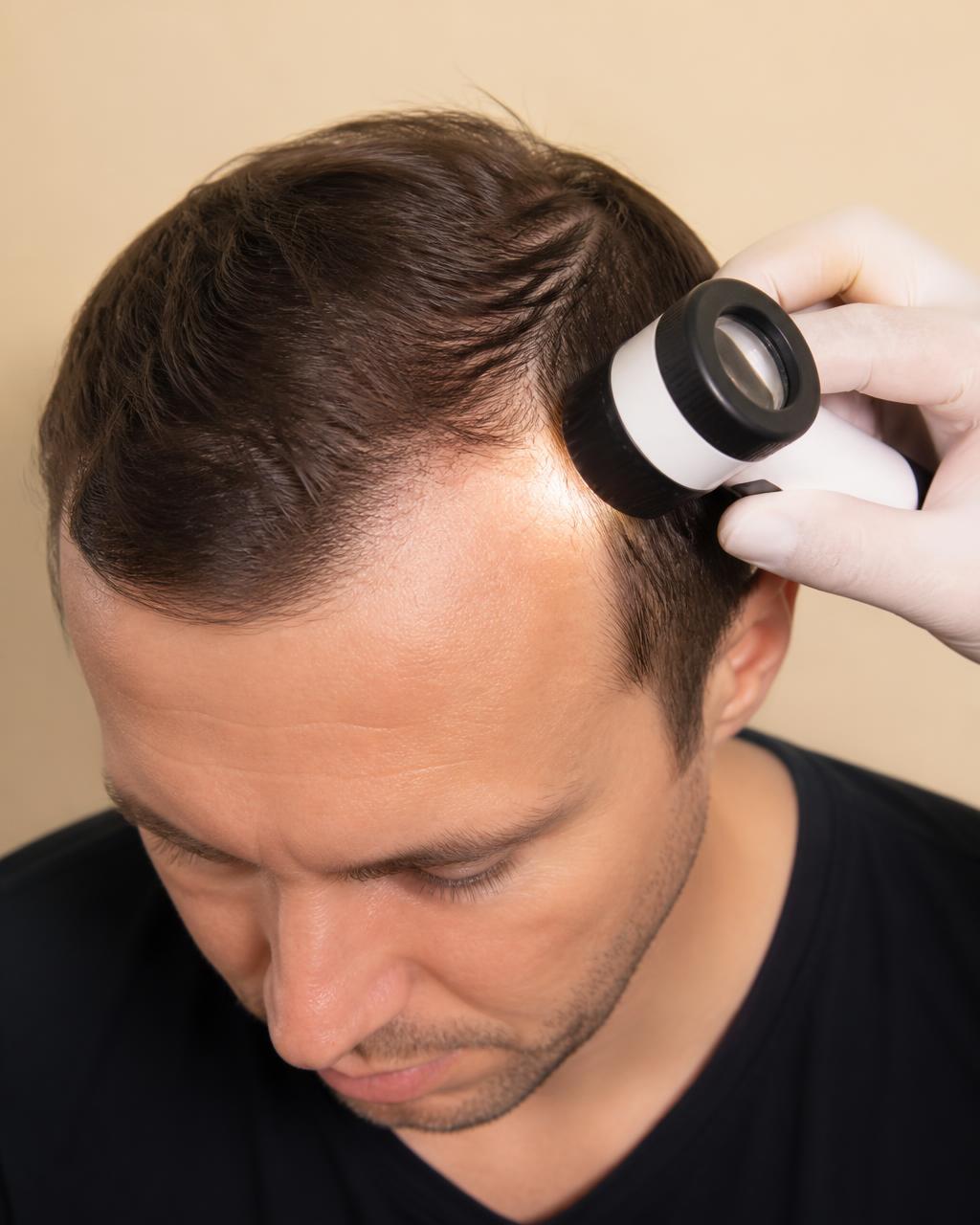
Results measured, not promised.
What to expect
- 01Miniaturisation slowed and stabilised
- 02Regrowth in follicles still active
- 03Denser coverage at crown and part line
- 04A defined, considered hairline
- 05Surgical options only when indicated
Begin with a diagnosis,
not a guess.
Share a few details and the clinic will reply with available consultation times for androgenic alopecia — one-to-one with Dr. Arely.
- Response
- Within 24 hours
- Consultation
- One-to-one, 45 min
- Assessment
- Trichoscopy included
- Location
- Dr. Arely Clinic
Frequently asked
It can be slowed and often partially reversed, particularly when treatment begins early.
Maintenance is generally ongoing — the genetic sensitivity remains once therapy stops.
Yes. Women typically thin diffusely along the part line rather than receding.
Only where follicles are no longer viable. Medical therapy is always optimised first.