Alopecia Areata
An immune condition treated with medical precision.
Alopecia areata is an autoimmune condition in which the immune system targets the hair follicle, producing smooth, well-defined patches of loss on the scalp, beard or eyebrows. Onset is often sudden and the course can fluctuate.
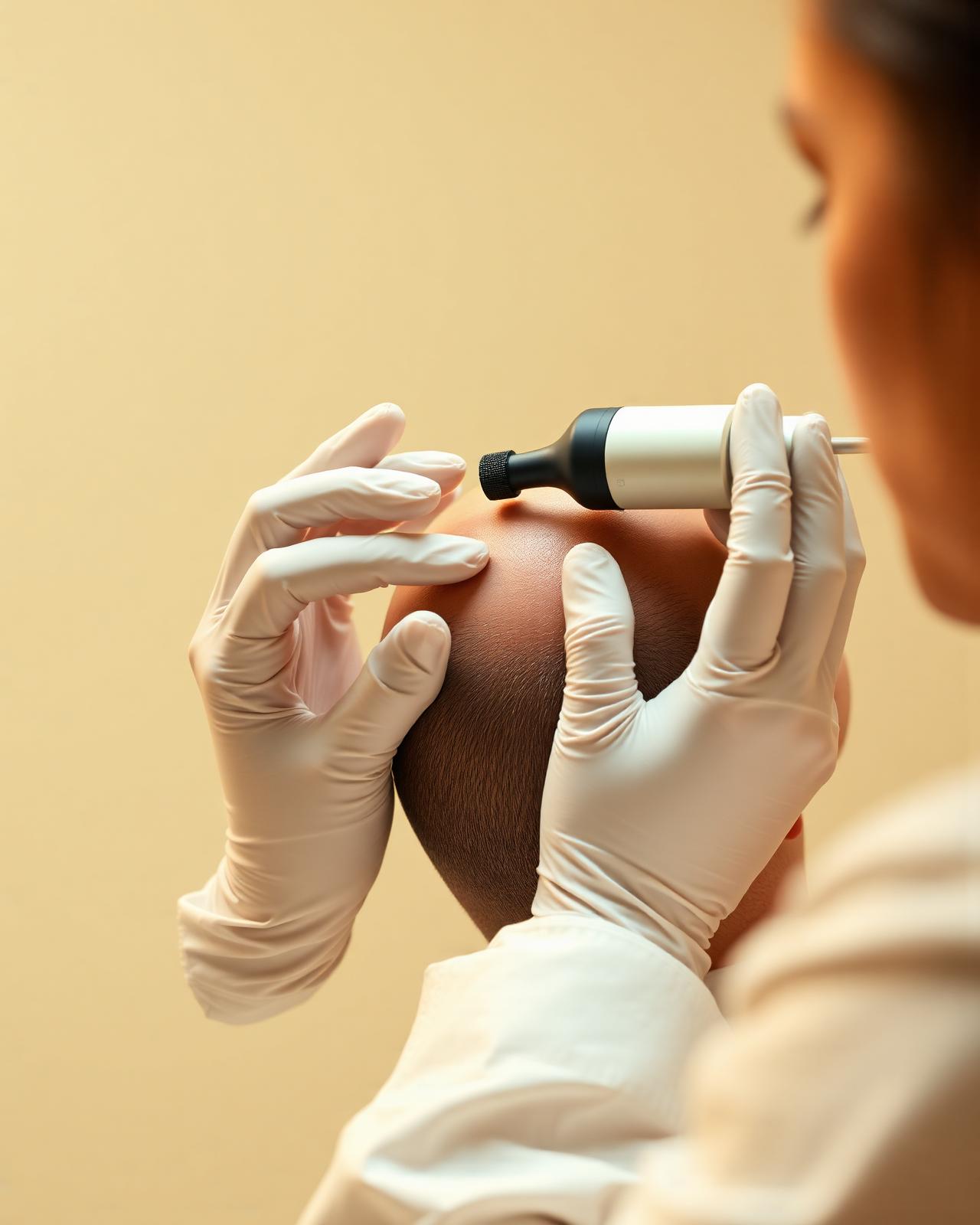
- Intralesional corticosteroids
- Topical immunotherapy
- Advanced systemic therapy
- Platelet-rich plasma (PRP)
Diagnosed first, treated second.
The follicle is not destroyed, which is why regrowth remains possible. Treatment calms the immune response locally or systemically while the follicle is protected and monitored.
- 01Intralesional corticosteroids
- 02Topical immunotherapy
- 03Advanced systemic therapy
- 04Platelet-rich plasma (PRP)
- 05Trichoscopic monitoring
- Sudden, well-defined patches of loss
- Personal or family autoimmune history
- Recurring episodes of patch loss
- Beard or eyebrow involvement
- Children and adolescents, with adapted care
How the treatment works
A sequence, not a single appointment — each step informs the next.
- 01
Diagnosis
Trichoscopy and, where required, biopsy distinguish areata from other patch loss.
- 02
Immune assessment
Thyroid and autoimmune screening establishes the wider clinical picture.
- 03
Targeted therapy
Intralesional corticosteroids, topical immunotherapy or advanced systemic options as indicated.
- 04
Review
Patches are photographed and measured to confirm regrowth and guide next steps.

Results measured, not promised.
What to expect
- 01Immune activity settled at the follicle
- 02Regrowth within affected patches
- 03Fewer and less frequent relapses
- 04Eyebrow and beard involvement addressed
- 05Clear, evidence-based expectations
Begin with a diagnosis,
not a guess.
Share a few details and the clinic will reply with available consultation times for alopecia areata — one-to-one with Dr. Arely.
- Response
- Within 24 hours
- Consultation
- One-to-one, 45 min
- Assessment
- Trichoscopy included
- Location
- Dr. Arely Clinic
Frequently asked
Frequently yes — the follicle survives, so regrowth is possible even after complete patch loss.
No. It is an immune-mediated condition and cannot be transmitted.
Injected therapy often shows regrowth within six to twelve weeks.
Relapse is possible. Ongoing review allows early treatment of any new patch.